

The Warning Light
What Public Health Learned to See—and What It May Need to Learn to See Again
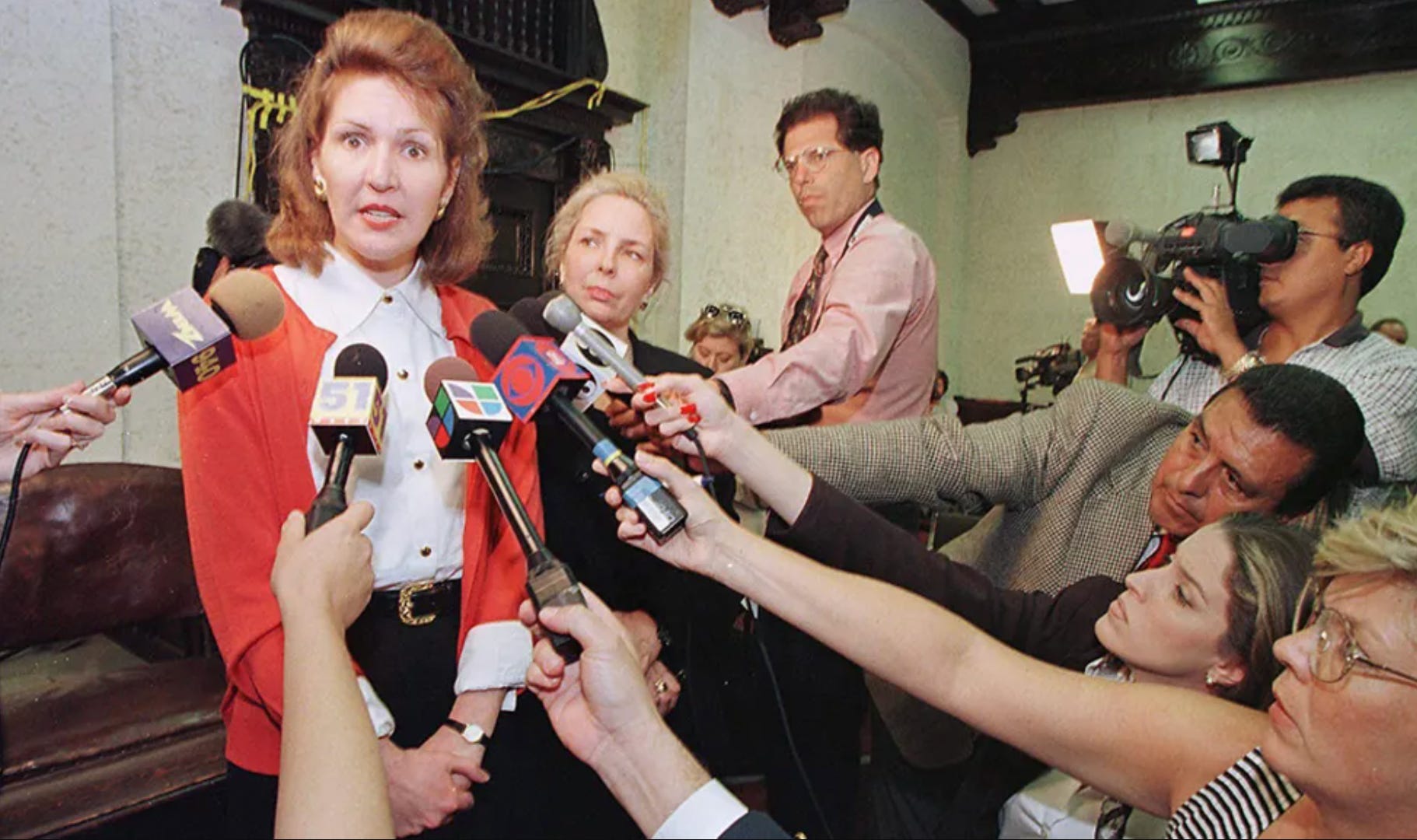
Norma Broin never smoked. Yet in 1989, she was diagnosed with lung cancer, and surgeons removed much of one lung.
For years, she had served coffee in the narrow aisle of an American Airlines cabin, where smoke curled from ashtrays built into the armrests and drifted through the shared air.
In October 1991, Broin and roughly two dozen other plaintiffs filed a class-action lawsuit in Miami against Philip Morris and other tobacco manufacturers. Three years later, the court certified a class of nearly sixty thousand nonsmoking flight attendants.
Years spent breathing other people’s smoke had become the experience that bound them together. Broin and her colleagues had chosen to work. Not to smoke. The smoke observed no such distinction. It crossed carpets, curtains, and uniforms, traveling the narrow distance between one person’s choice and another person’s lung.
When the case reached trial, the industry chose a settlement over a verdict. On October 10, 1997, the companies agreed to provide $300 million to a research foundation and to cover legal fees and costs, while admitting no wrongdoing.
From that agreement emerged the Flight Attendant Medical Research Institute, or FAMRI. In the decades that followed, it funded research into the prevention, early detection, and treatment of diseases associated with secondhand smoke. The money came from the companies that continued to deny responsibility for the harm.
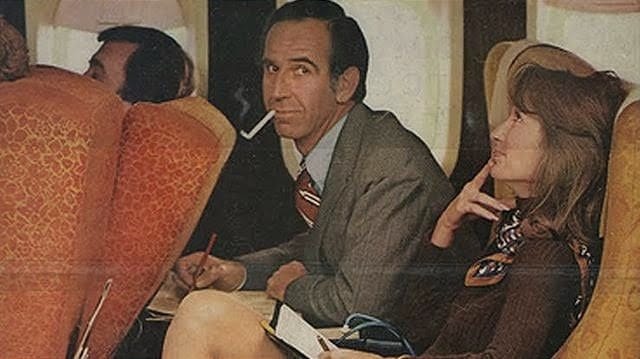
The cabin where Norma Broin served coffee and drinks was both a workplace and, at altitude, a social laboratory. It operated according to a simple rule: whoever lit a cigarette determined the terms of the air. Everyone else adjusted.
At the time, the arrangement seemed ordinary. Smoke filled restaurants, hospitals, government offices, waiting rooms, and homes. Nearly every place where families or strangers shared air. It carried the authority of custom. It was so ordinary that few thought to ask who owned the air.
Then, slowly, the air changed.
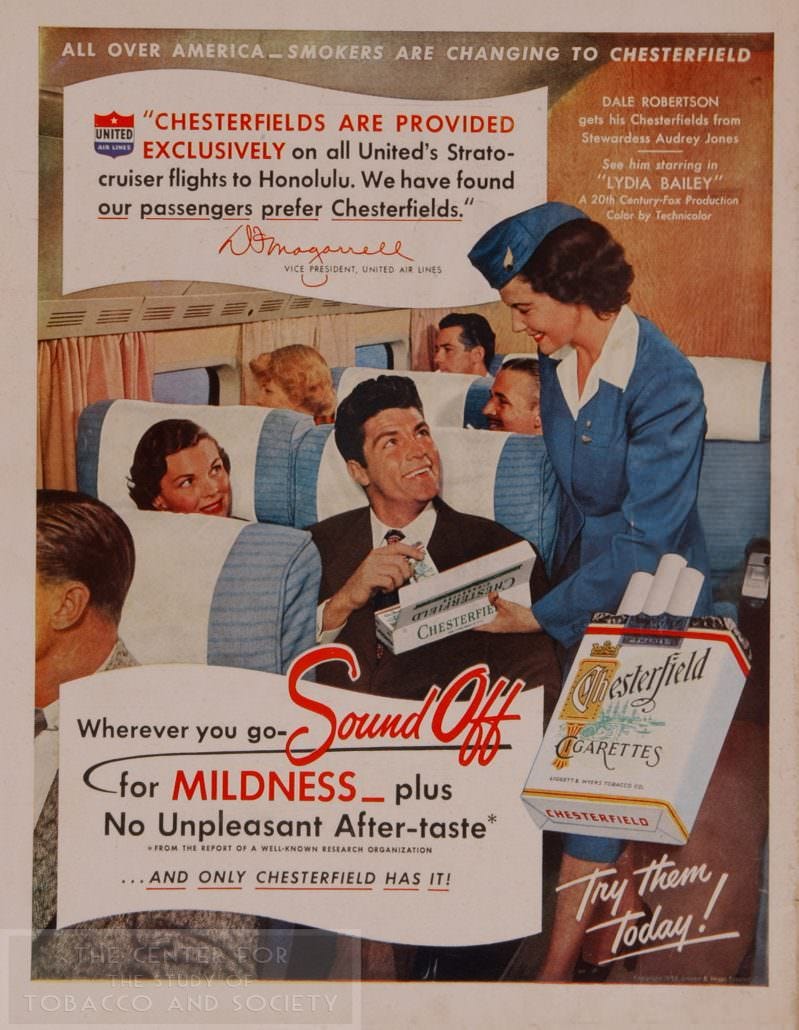
The history of tobacco control is often told as a sequence of scientific discoveries followed by political reforms. First came the evidence that smoking caused disease. Then came the recognition that smoke harmed others. Taxes followed. Health warnings. Advertising restrictions. Smoke-free environments. National laws. The Framework Convention. And, slowly, custom changed.
The account is true, but incomplete. Tobacco control did more than accumulate evidence. It changed what counted as visible.
Public policies do not merely respond to problems. They also function as machines of perception. They teach institutions what to notice, which harms matter, which actors warrant distrust, which subjects deserve protection, and which futures must be anticipated.
Over time, these habits of attention cease to feel like choices. They become common sense.
In tobacco control, this grammar of perception emerged through a series of displacements. The first occurred when smoke ceased to belong only to the smoker.
Smoking could once be framed as an assumed risk. A person chose to expose their own body, and the damage appeared to begin and end within a single biography. The recognition of secondhand smoke broke that frame. Smoke entered lungs that had never chosen it. From that moment on, smoking could no longer be understood as a wholly private act.
A new figure entered the law and the public-health imagination: the person exposed without consent. The waitress clearing glasses in a smoke-filled bar. The child in the back seat of a closed car. The colleague spending eight hours a day in a windowless office. Norma Broin, serving coffee above the clouds.
The state no longer had to justify intervention solely as a means of protecting people from their own choices. It could act on behalf of those forced to breathe the choices of others.
Tobacco policy ceased to concern smokers alone. It became a policy about the relations between people.
That shift carried a consequence that now appears inevitable, though nothing about it was automatic. Once harm no longer seemed to end inside the smoker’s body, attention moved toward the places where smoke passed between people’s bodies. Restaurants, workplaces, schools, airplanes. These were no longer merely settings in which exposure occurred. They became part of the machinery of prevention.
The shift became common sense precisely because it succeeded. Many people today can scarcely imagine a commercial flight filled with smoke or a classroom lined with ashtrays. What once disappeared into the background has become almost impossible to picture. Prevention no longer began and ended with the cigarette. It extended to the air people shared.
Yet neither smoke nor environment exhausted the cigarette’s meaning. There was the gesture, too.
Smoking was never merely a means of delivering chemicals to the body. It was a scene in full: the cigarette between the fingers, the pause in the workday, the flare of a lighter, the practiced pose before a camera, the small congregation on the sidewalk. It was interval and object, addiction and prop, dependence and language.
Strategies of denormalization sought to remove the cigarette from the center of ordinary life. The aim was to separate it from the meanings it had accumulated: freedom, glamour, maturity, belonging.
The cigarette continued to be regulated for what it did inside the lungs. It also came to be regulated for what it meant in public. Repetition is never neutral. What remains visible teaches.
Once visibility itself becomes an object of regulation, resemblance acquires political force. A gesture may be treated as evidence of exposure, but also as a carrier of memory, permission, and social meaning. What looks like smoking may therefore activate part of the regulatory response created against smoking, even when the material conditions of the act have changed.
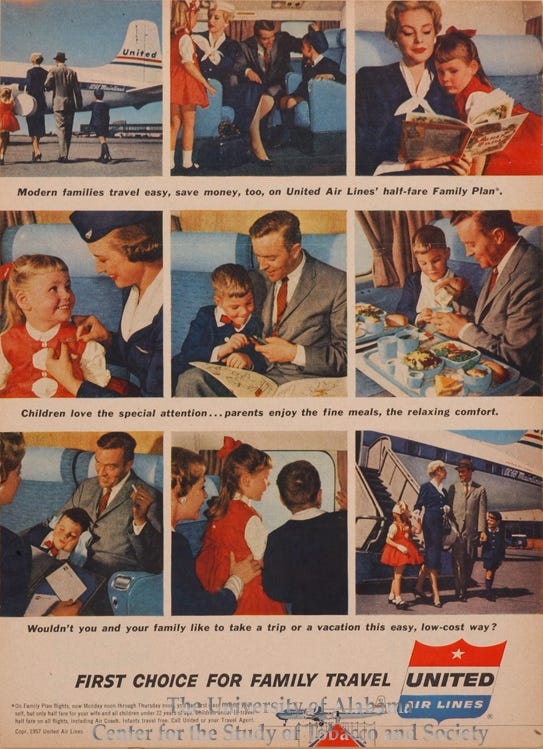
As tobacco control widened its field of vision, the person exposed without consent gradually acquired a face. It was not always the same face. At work, it belonged to a waitress, an office worker, or a flight attendant serving coffee above the clouds. In public argument, it increasingly became the face of a child.
Children occupy a singular place in the moral imagination of public health. Their bodies are still developing. Their environments are largely arranged by adults. The law recognizes forms of vulnerability they cannot be expected to manage alone.
Children are persons in the present, with injuries and interests of their own. But they are also made to carry another meaning: the future imagined in human form.
A child in the back seat of a car is therefore not merely a passenger. In the eyes of policy, she becomes evidence of an unequal arrangement of power. The adult decides whether to light the cigarette; the child inherits the air. What appears from the front seat as an individual act becomes, from the back seat, an imposed environment.
When a measure is presented as protecting children, it addresses more than an immediate exposure. It also invokes the adult life that exposure might help shape: the illness that may emerge years later, the gesture made familiar through repetition, the dependence that might take hold before it can be recognized as dependence.
Childhood turns prevention into a politics of time. It authorizes intervention against an injury already occurring and against a trajectory that has not yet hardened into fate.
The political power of childhood lies partly in its ability to compress the distance between possibility and obligation. Once attached to the image of a child, a future harm acquires some of the urgency of an injury already underway. Uncertainty does not disappear, but the moral tolerance for waiting becomes smaller.
This capacity to act before harm becomes fully visible is one of modern public health’s defining achievements. To wait for certainty is often to arrive after the body has already absorbed the cost. Successful prevention, therefore, assumes a paradoxical form: its evidence lies partly in absence, in events that have never occurred, diseases that have never emerged, and futures that never came to pass.
The power to anticipate harm carries its own temptation. The farther policy moves into the future, the more authority it claims over lives and events that do not yet exist. Prevention must operate through probabilities; it cannot wait for every causal chain to complete itself. Yet between recognizing a probable harm and treating every possibility as an approaching certainty lies a delicate border.
Each displacement in tobacco control widened the field of protection. Each also widened the reach of public-health interpretation.
Vaporized nicotine products appeared precisely along this border twenty years ago. They entered a field whose habits of perception had been assembled over decades through the experience of combustion, involuntary exposure, industrial deception, denormalization, the moral elevation of health, and the political and symbolic power of childhood.
In the conventional cigarette, combustion, smoke, ash, dependence, cancer, gesture, advertising, and youth had converged in a single object. Harm had a smell. It stained fingers, provoked a morning cough, and settled into curtains.
Vaporized products disturbed that unity.
They preserve part of the scene—the device raised to the mouth, the visible exhalation, nicotine’s presence in public—but alter the material conditions of harm and exposure. There is no combustion. The aerosol differs from smoke. So does the chemistry.
When appearance persists while materiality changes, classification ceases to be self-evident. Vaping resembles the cigarette closely enough to reactivate the public-health memory built against it, yet differs enough from combustion to force another question: is this the return, in altered form, of a threat thought to have been contained, or a possible alternative to the cigarette’s principal source of harm?
The object changes meaning according to the feature treated as decisive and the counterfactual against which it is judged.
If combustion is the focus, vaping may appear as a form of harm reduction for people who would otherwise continue to smoke. If nicotine is the focus, it may look like another addictive consumer product. If denormalization is the focus, it may emerge as a threat to an architecture built over decades. If youth initiation is the focus, it may appear as a possible pathway to smoking.
Each frame illuminates one dimension and obscures another. None is wholly false; all simplify it. none exhausts the object.
The controversy, then, is not merely toxicological. It is classificatory.
Classification does not simply precede evidence in a linear sequence, nor does evidence mechanically determine classification. Categories shape which evidence becomes legible. Accumulated evidence, in turn, may unsettle the categories through which the object was first perceived.
Public health approaches vaping with a reflex shaped by history: decades of confrontation with one of the twentieth century’s most powerful industries. That history includes manipulated evidence, marketing to young people, and years in which preventable disease accumulated while uncertainty was manufactured and prolonged.
The Broin litigation offered its own record of denial. Industry executives minimized addiction, disputed the relationship between cigarettes and illness, and challenged the dangers of secondhand smoke.
James Morgan, then chief executive of Philip Morris USA, was asked in a videotaped deposition whether nicotine was addictive. He answered that pharmacologically, it was not. Behavioral dependence, he suggested, belonged in the same category as caffeine; or, in his own case, Gummy Bears.
“I love Gummy Bears,” he said, “I want Gummy Bears, and I like Gummy Bears, and I eat Gummy Bears, and I don’t like it when I don’t eat my Gummy Bears, but I’m certainly not addicted to them.”
Morgan’s answer entered the field’s memory. Distrust did not emerge only from fantasy. It was earned too.
That history survives not only in archives and legal precedents. It becomes professional instinct, regulatory vocabulary, training, and organizational routine. Institutions learn not only what happened but also what a threat is supposed to look like.
The more successful that training becomes, the faster recognition occurs; and the greater the possibility that recognition may precede discrimination.
Distrust in this field can become indiscriminate, even paranoid. What began as a justified response may harden into an institutional reflex. Without memory, public policy would be naive. Governed entirely by memory, however, it may become unable to distinguish substantive continuity from visual or symbolic resemblance.
Institutional memory protects. It denies each new product the shelter of historical amnesia. Its lessons survive in stories of deception, precautionary standards, evidentiary habits, regulatory categories, and assumptions about commercial conduct. Together, they gave public health a prepared field of vision through which to interpret new nicotine devices.
But memory can also compress differences too quickly. An institution governed by analogy may mistake visual continuity for toxicological equivalence. Every claim made in the present may begin to sound like the return of a strategy from the past.
Forgetting the tobacco industry would be indefensible. The harder task is determining what evidence is sufficient to establish that a historical pattern has returned.
Claims of reduced risk require the same scrutiny. A product does not become a cessation tool because its manufacturer calls it one. Lower toxic exposure in laboratory measurements cannot, by itself, establish a population-level benefit. Patterns of use, clinical histories, cessation and initiation rates, product design, marketing, access, and regulation all shape the outcome.
Harm reduction becomes an empirical proposition only when its claims remain open to failure. Its validity must be demonstrated in particular products, populations, and patterns of use. Not assumed in advance.
Each way of seeing vaping begins with a question, and each question tends to organize a policy.
How many new users might these products create—and why?
How much harm might they reduce among people who already smoke—and how? Under what conditions?
The danger begins when a question hardens into its own answer. The future presupposed by the question then begins to govern the evidence: the generation that might be recruited, or the smokers whose present risk may persist while a less harmful alternative remains unavailable. Whatever fails to fit the chosen future may appear marginal, irrelevant, or suspect before it has been examined.
No final classification of vaping is likely to remain final for long. It depends on distinctions among products, populations, patterns of use, regulatory systems, and evolving evidence. The prior question is how a field decides what it is looking at—and what recedes from view once that decision hardens into common sense.
Institutions cannot wait for complete certainty about what an object is or what it will become. Classification reduces ambiguity enough for law and administration to act. The danger arises when an administratively useful category begins to stand in for the object itself.
To say that categories and evidence develop together is not to say that evidence is arbitrary or that every classification is equally adequate. Some categories describe the world better than others. The point is that evidence never arrives entirely independent of the conceptual and institutional arrangements through which it becomes visible.
Public health must reduce harm among people who smoke today while preventing harms that may emerge tomorrow. Those timelines overlap. They do not always point toward the same intervention.
For decades, public health learned to follow smoke beyond the smoker’s body: into shared air, into a child’s lung, into a flight attendant’s uniform, into the statistical future of a generation. Turning those exposures into public responsibility became one of the twentieth century’s great achievements.
That achievement also left behind categories shaped by the particular object public health had learned to defeat.
Today, the cabin where Norma Brion served coffee has clean air. The ashtrays built into the armrests are gone. Above every row, an illuminated no-smoking sign remains.
It lights up at every takeoff.
The warning survives the world that made it necessary.

Thank you very much, Roberto, for your careful reading and for your thoughtful comments. I sincerely appreciate them.
I agree: Norma Broin’s experience was an extreme occupational exposure and should not be taken as representative of every instance of environmental tobacco smoke.
My intention was not to use her case as an epidemiological average, but as a historical and legal turning point illustrating how public health came to recognize involuntary exposure as a matter of collective responsibility.
I should have acknowledged more explicitly that the intensity of exposure varies enormously across different settings.
I also think your observation about smoke-free versus clean air is well taken. The point is that commercial aircraft are no longer filled with tobacco smoke, not that cabin air is free from every possible contaminant.
I also share your concern that tobacco control should not be romanticized or treated as beyond criticism.
One of the essay’s central arguments is precisely that successful institutions develop habits of perception that are in part historically justified but may also become overly reliant on analogy.
Institutional memory is indispensable, but it can sometimes compress meaningful differences between old and new products.
Where I would probably differ is in how far that criticism should be taken. I do not think the history of secondhand smoke is simply a case of sacred or unquestionable knowledge. The evidence supporting the harms is substantial, even though some studies have produced different estimates and prompted legitimate methodological debate.
Likewise, I believe it is possible to criticize excesses, overreach, or the treatment of scientific dissent without concluding that the entire evidentiary foundation is unsound.
Your comment about Enstrom and Kabat raises an interesting question that is somewhat distinct from the essay’s main argument: how scientific and regulatory communities handle dissent, particularly in fields shaped by decades of documented industry deception. That history shapes institutional mentalities, and I agree that this dynamic warrants careful examination.
Ultimately, the essay is less concerned with defending or criticizing tobacco control than with asking a prior question. How do institutions learn what to see, and under what conditions can historically successful categories begin to obscure as well as illuminate new evidence?
I believe that question benefits precisely from the kind of critical engagement you have offered.
Thank you again for your careful reading.
A typo inn the last paragraph previous post: "While this moralistic absolutist zeal could be justified because smoking is so harmful, tobacco control is NOW applying same moralistic absolutist zeal against vaping, pouches and non-combustible alternatives. Now they have no justification of acting for the "common good", now tobacco control is a major peddler of harm and death. It said "not" it is "NOW"